New Zealand: Stories from the Road
Part 5
Signs of madness: election edition
As it turned out, I was travelling New Zealand during the build up to some kind of an election. This meant that when I wasn’t admiring the beautiful landscape I was admiring the, often hilarious, election posters and campaign material. An old trick I learned from Bill Bryson is that reading the local newspapers when travelling to a new place can be immensely entertaining and can tell you an awful lot about the place you are in. I believe he would have had great fun with some of these election posters.
I found it very funny to consider the thought process (or perhaps lack thereof) that went into creating these posters. What exactly motivated people to choose the photographs they chose or the words and symbols they opted for. A tick seemed to be a very popular choice of symbolism. I imagine a group of middle-aged men in crumpled suits gathered in a small room around a table discussing the ideal symbol. ‘We need a symbol that conveys absolute positivity,’ ‘people need to feel good when they see this poster, like they’ve seen something they can count on.’ They all murmur and scratch their heads. ‘Well a smiley face always makes me feel better,’ one of them mumbles. They begin to shift uncomfortably in their seats as it becomes clear that none of them know the answer to this impossible question. Out of nowhere the oldest and most crumpled of the men suddenly sits up straighter, a lightbulb appears above his head, and the others hold their breath eager to hear the genius about to be spoken. ‘How about a tick,’ he says. They all breathe out, disappointed, they thought he had the answer. Then they ponder and gradually they begin to nudge each other, whisperings of ‘hey, he might actually be onto something here’ start to spread around the room as the excitement grows. It has dawned on them all that this is the answer, the most universally positive symbol is obviously and unmistakably the simple tick. Thus, the staple symbol of any election poster is born. Or at least that’s how I imagine it went down.
The choice of photographs was also rather amusing to me. Many opted for the classic, professionally shot photograph in some power pose or another. Often with their arms crossed to clearly show they meant business. Some, however, evidently wanted to seem more down to earth. One memorable poster displayed a photograph of a man clearly taken whilst he was at some kind of party. The lighting couldn’t be described as professional, and it seemed to have been cropped to remove the people he was standing with at the time. I also believe he may have even had a fair few drinks at the time the photo was taken which, for me, only made him seem a better candidate. The kind of person I could get on with.
The funniest bit for me, though, was the choice of words. #1 Sarah provided no other reason to vote for her apart from the fact that she was, as explained, the #1 Sarah. Bruce wanted us to know that his key attributes were: a. Energy, b. Enthusiasm, and c. Spirit (yes, they really were listed like that). And Richard Johns’ only told us that voting for him was ‘common sense’ or perhaps the fact that he was running for mayor was ‘common sense,’ he didn’t really explain that one.
Two notable mentions that I simply must share with you were the ones that have stuck in my mind most clearly. The first was a simple, plain white background with big red letters (in comic sans of all fonts) that said: vote Jim Hilton. Not to be mistaken with Vote Jim Hilton or even VOTE Jim Hilton, it simply said vote Jim Hilton. I don’t know anything else about Jim Hilton other than that we should vote for them, they clearly mean business. The second, and my absolute favourite of the bunch, was even more simple than the first. It was handmade on a piece of white card, spray painted with a stick figure and then three boxes with big green ticks in them. Nothing more and certainly nothing less. It’s hard to be sure whether this was a genuine poster or not, but I sincerely want it to have been and, if I had been able to vote, they certainly would have been my top choice.
It’s rude to stare
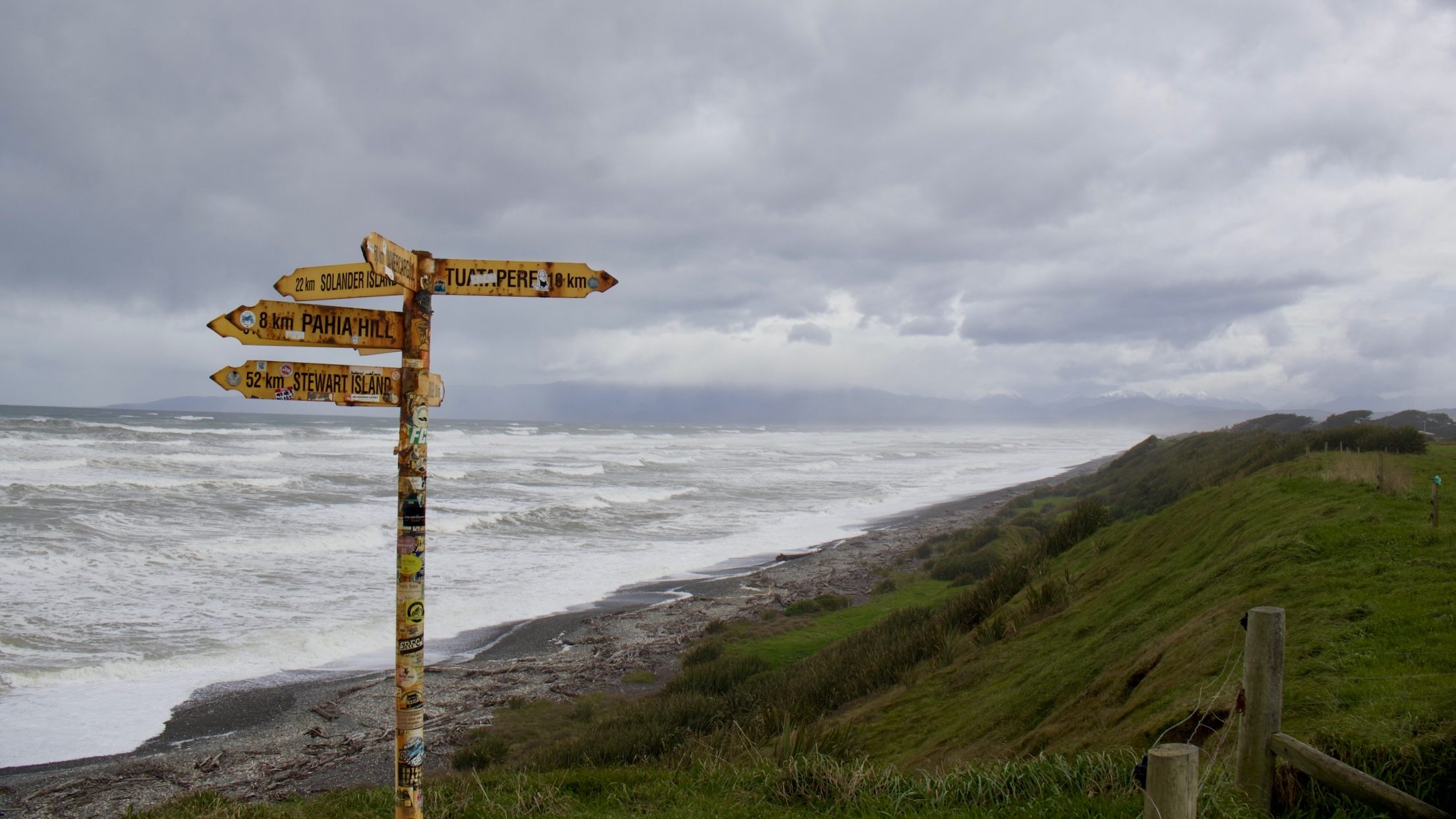
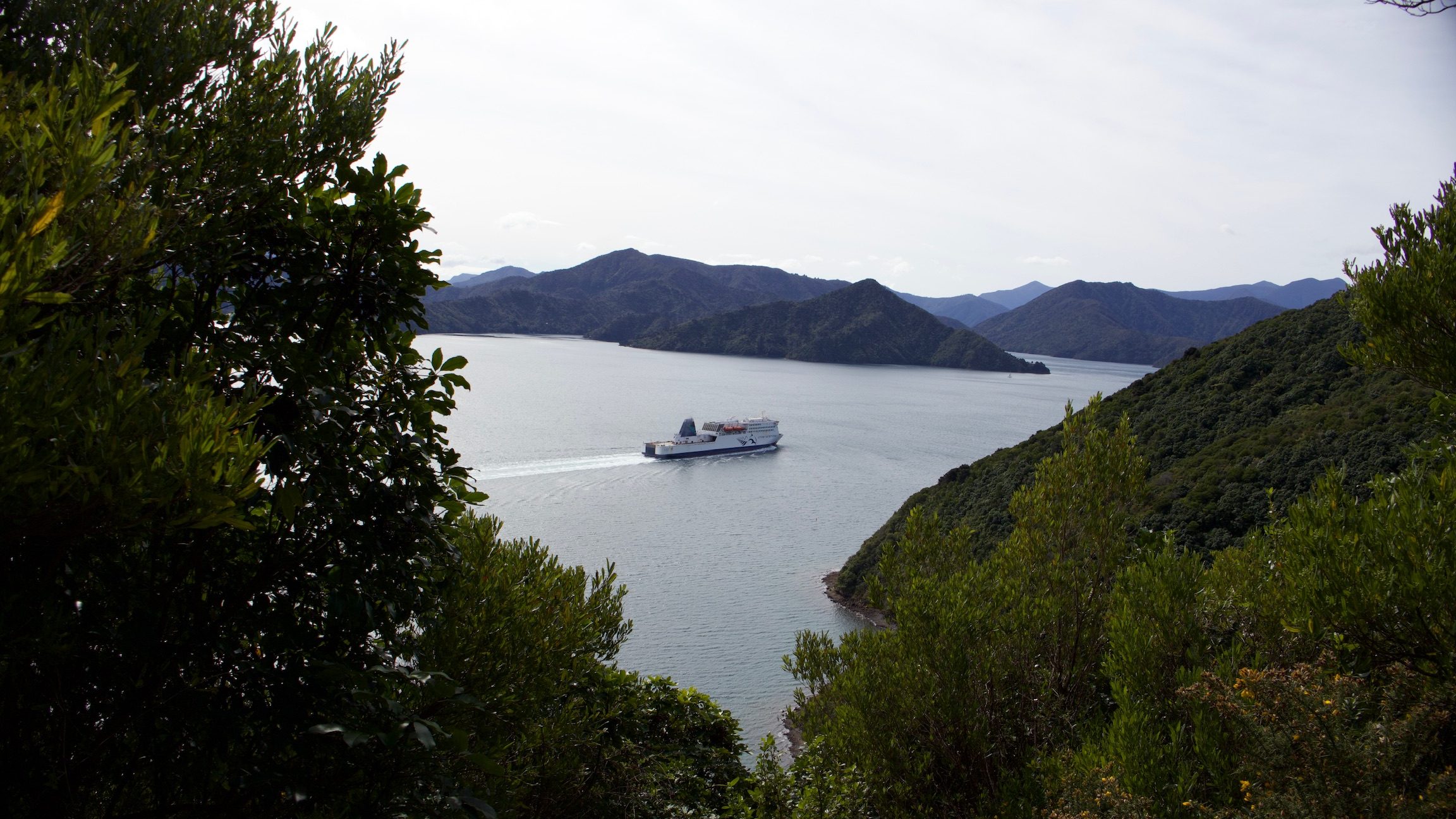
The ferry trip from Wellington at the bottom of the North Island and Picton at the top of the South Island is, in my humble and slightly biased opinion, cheaper, easier, and just as stunning as the scenic boat ride through Milford Sound. Once the treacherous Cook Strait is navigated the journey takes you through the peaceful and utterly stunning Queen Charlotte Sound (a sound being a flooded river valley, in contrast to a fjord which is a flooded glacial valley).
When you aren’t admiring the view and, like me, when lingering travel sickness from the Cook Strait means you also can’t read, the ferry provides a marvellous opportunity to people watch and observe the quirks of human behaviour. The way kids behave when they are given even an ounce of freedom, as though they are the coolest and most knowledgeable people in the world. The way people behave when walking around somewhere new on their own, never willing to admit they have no idea where they are going even when they have clearly gone the wrong way. The way people behave when their friends leave them alone at the table, not sure what to do with themselves but determined not to look like it. Ultimately, we all do the same things when in these situations and I find it both hilarious and fascinating in equal measure.
I even saw the family I believed only existed in Mountain Warehouse or Go Outdoors catalogues. A father, a mother and two kids all wearing the same lightweight puffy jacket each in a different bright, bold colour. They all had those hiking backpacks and their own reusable water bottles and the kind of sunglasses that are definitely function over form. They stoically remained outside for the entire journey, clearly pretending not to be cold and happily pointing at various landmarks, their hair somehow only blowing gently and glamorously despite the severity of the wind, occasionally flashing perfect white smiles and hugging each other lovingly. They made me sick.
By far the strangest of the lot, however, was the girl sitting alone waiting for her partner to come back from taking pictures outside. She wasn’t reading or eating or talking to anyone or even listening to music or a podcast. She was just sitting staring at people looking pensive, taking notes on her phone every now and then and making everyone feel uncomfortable. They say if you can’t find the weirdo on the bus (because there’s always at least one) that means it’s you. Is the same true when you are on a ferry?
Driving too much but seeing just enough
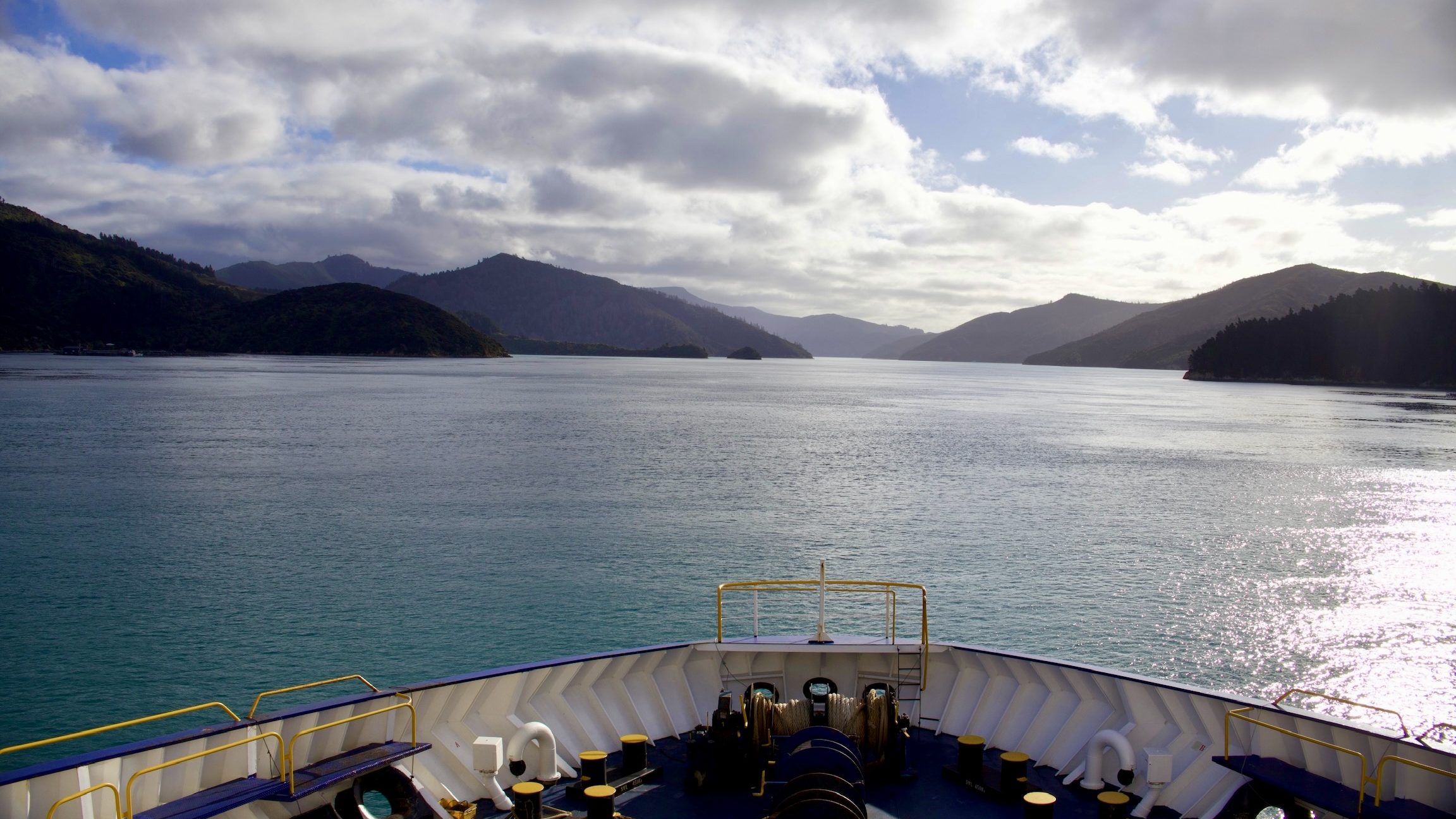
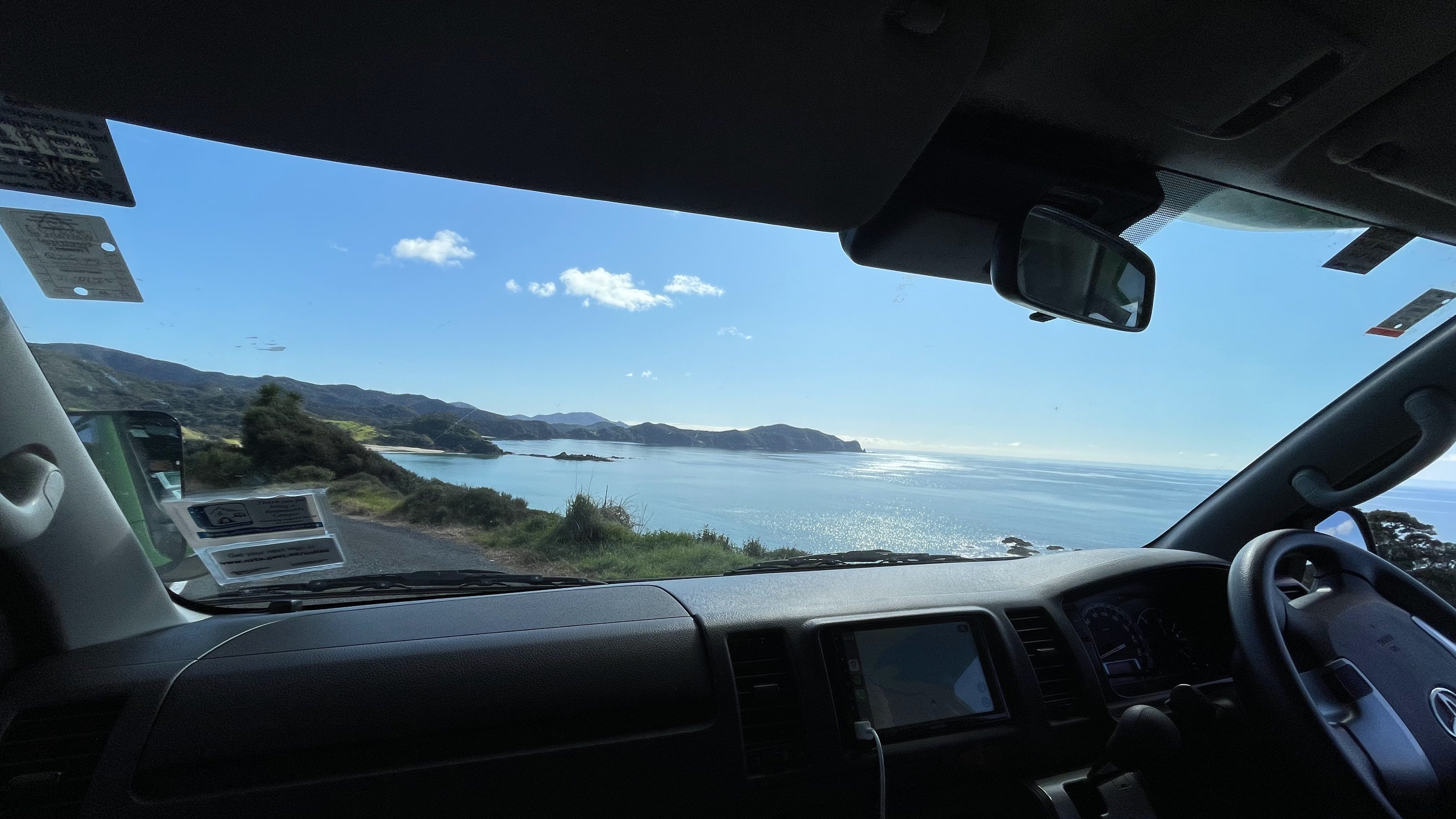
Spending two months driving around a country as small and uninhabited as New Zealand really is a fantastic way to get to know somewhere. Our epic road trip took us everywhere. Through mountain ranges, along coastal roads, down major highways and dirt tracks, through fields and forests and villages and towns large and small. Through all these different places one thing always remained the same. The road signs were hilarious. Often unnecessarily polite they were generally also covered in graffiti that showed similar politeness as it was always very carefully placed so as not to obscure any of the writing on the signs. You certainly don’t get vandals that considerate in the UK.
The most alarming road signs I found were those at points where a railway line crosses the road. In general rail crossings in the UK will be marked by multiple road signs and markings as well as traffic lights, bells, and big red and white striped barriers in order to make absolutely certain drivers know there is a rail crossing there. When there is a train due to come past some time in the next 10 minutes the barriers block off the road and everyone must wait until the train has safely passed and reached the next town before they’re allowed to continue such is the concern for public safety (and such is the lack of trust in the common sense of the public in question). In New Zealand, however, there is none of this. A rail crossing is merely marked by nothing more than a little orange sign that reads ‘check for trains.’ Yes, you did read that right, that is genuinely all there is at every rail crossing that isn’t located in the middle of a large town or city. That is the extent of the safety precautions, and you best believe I checked for trains more thoroughly than I have ever checked anywhere for trains in my whole life.
My personal favourite signs, which I’m still not fully sure I understand to this day, read: ‘Heavy vehicles please no engine brakes for the next 5km.’ Now before the mansplainers get too excited, I am aware of what engine braking is. What I couldn’t understand was why on earth it would be forbidden as there was absolutely no discernible difference between the section of road where it was forbidden and everywhere else. The best part for me, though, was the fact that the sign actually said ‘please.’ I’m not sure it can get more Kiwi than that.
This politeness didn’t stop with the road signs. The Kiwi attitude to merging is a mentality we could all benefit by learning from, most of all the average British commuter should certainly take notes. In those places where two lanes merge into one there were always signs instructing people to ‘please merge like a zip,’ often with helpful diagrams to indicate exactly what this meant. These guides weren’t needed, however, as merging respectfully appeared to be built into the Kiwi way of life. I have never experienced anything more civilised and more starkly in contrast to my expectations. In the UK merging like a zip is practically unheard of and anyone who attempts to do so is destined to be shunned from society for a good long while if not the rest of their lives. God forbid they try to do it multiple times, the punishment for which, I’m sure, equates to extremely public humiliation of some form, potentially even jail time. Not in New Zealand.
Where the politeness stopped, I discovered, was the fire station sirens. In many of the small towns we spent the night in there was a small fire station largely run by volunteers. When there is an emergency and everyone must be called to action these stations had a siren which would sound loud enough for the entire town to hear thus informing all the volunteers that it was time to go. Very sensible and practical. I was all for this system until I realised that a fire emergency can strike at any time. Even in the middle of the night. Apparently no one had considered the potential that, at night, they could have a designated volunteer who could, in the event of an emergency, quietly and respectfully visit the houses of every other volunteer and calmly wake them up. Dispensing of the need to sound the siren and wake the entire town and anyone within a 100 mile radius. If anything, I think they may have actually sounded the siren louder in the middle of the night. Not to worry, however, I wasn’t asleep anyway, I was too busy checking for trains.
Lib Howden
 Cam and Lib With Us